We're introducing Bird View to our newsletter to bring important news about the crypto and finance world to you.
In the first edition, we'll answer FAQs about the new tax law as it concerns remote workers, freelancers, and content creators. Read on ✍🏾
1. Is there a new tax law in Nigeria? ⚖️
Yes, the federal government recently passed the Nigeria Tax Act (NTA), which merges over 50 different tax laws into one code to simplify payments and compliance. The law will come into effect in 2026, so brace up!
2. Does the new tax law apply to freelancers and remote workers? 🤔
Yes, it does. As long as you live in Nigeria and earn an income, the new tax law has your name on it. The federal government expects you to self-report your earnings, whether as a freelancer or solopreneur.
3. How can I avoid double taxation as a Nigerian remote worker? ⚖️
Double taxation means your income is taxed twice.
Here's what I mean: if you're a Nigerian resident whose income stream comes from the UK or the US, the NTA says you must be taxed the same way UK tax laws mandate non-residents earning income in the UK pay their dues.
Nigeria, however, has a double taxation treaty (DTT) with the UK that ensures that only one of the countries will tax your income. To avoid double taxation, claim a tax relief in the UK before you're taxed or apply for a refund after you've been taxed.
In cases where a DTT country taxed you but you can't claim a relief, the NTA allows you to claim a tax credit to free you from taxes on the same income.
4. Which countries does Nigeria have a DTT with? 🫱🏾🫲🏾
Belgium, Canada, China, the Czech Republic, France, the Netherlands, Pakistan, the Philippines, Romania, Singapore, South Africa, Spain, Sweden, and the UK.
5. What are the new tax brands? 📝
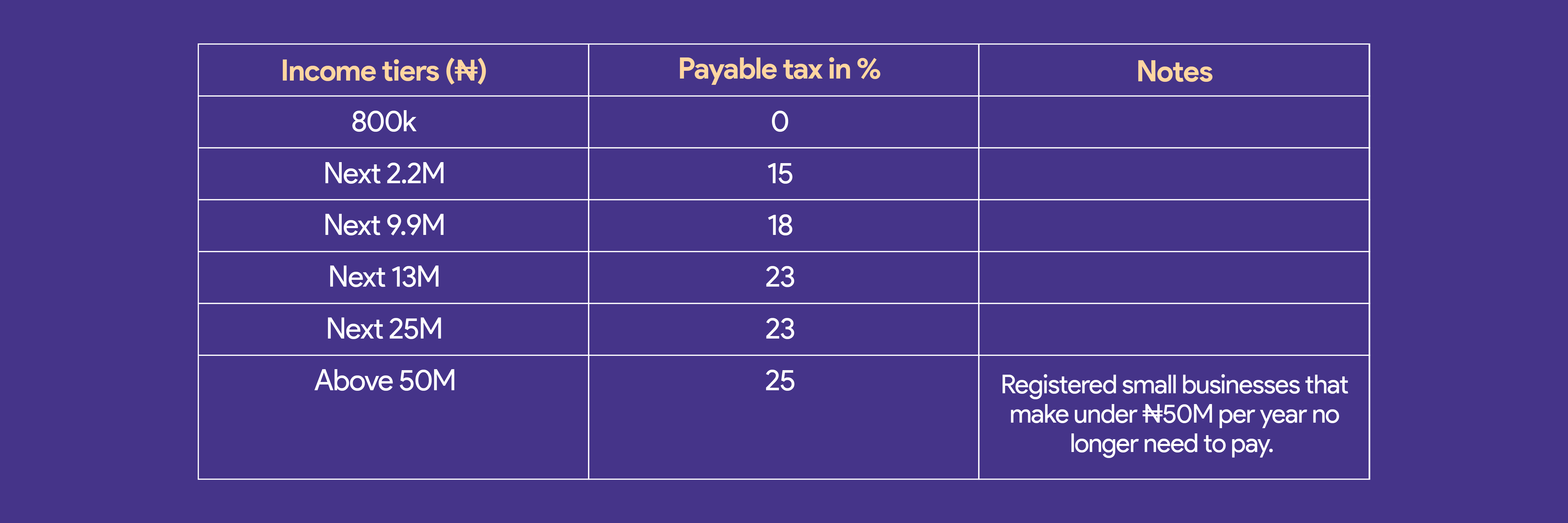
The first ₦800k of your annual income is tax-free. However, yearly income above ₦800k will be taxed at rates ranging from 15% to 25%, depending on the total earnings.
Here's how it works in the table below: